The Hidden Mental Load Women Carry Every Day
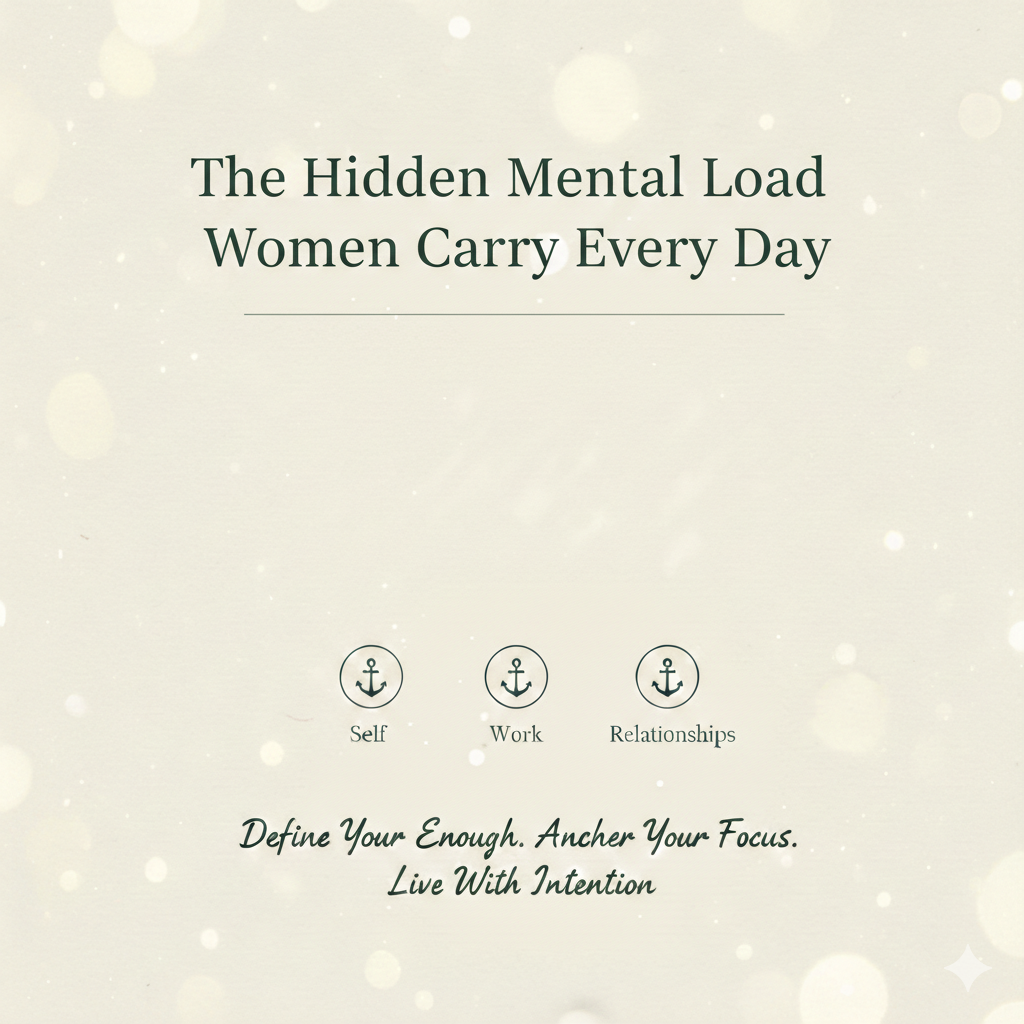
There is a kind of tiredness that doesn’t come from physical work. It comes from thinking. Remembering. Anticipating. Planning. Tracking. Adjusting. The invisible list that never fully leaves your mind. This is the hidden mental load many women carry every day, and it is heavier than it looks.
Mental load is not just about tasks. It’s about being the one who notices what needs to be done. It’s remembering the email that hasn’t been answered, the appointment that needs scheduling, the conversation that needs smoothing over, the detail that might go wrong. Even when you are sitting still, your mind is moving. Even when the day seems manageable from the outside, internally you are coordinating dozens of small responsibilities.
This constant background thinking is what makes so many overwhelmed women feel exhausted and behind at the same time. It’s not just workload. It’s the pressure of holding everything together. When your mind is stretched across work, relationships, and your own needs simultaneously, nothing feels fully complete. You might finish your work tasks but feel guilty for not being present. You might rest but feel anxious about what’s waiting tomorrow. The mental load keeps the day open-ended.
This is where structure matters — not rigid routines, but grounded anchors. When your day has no clear boundaries, your mind tries to hold everything at once. The Three Anchors: Self, Work, and Relationships are not another to-do list. They are containers. Instead of mentally juggling everything that could matter, you intentionally decide what will matter today in each area. One meaningful focus for your work. One act of care for yourself. One moment of connection.
The shift is subtle but powerful. The mental load begins to shrink when the day has edges. When you define what is enough for your work, you stop endlessly expanding expectations. When you define what counts in your relationships, you release the pressure to be everything to everyone. When you define something small but real for yourself, you interrupt the pattern of self-neglect.
The hidden mental load doesn’t disappear overnight. But it softens when you stop trying to carry the entire week inside a single day. Completion isn’t about clearing every responsibility. It’s about choosing what truly counts — and allowing the rest to wait.
You are not exhausted because you are weak. You are exhausted because you have been carrying more than is visible. When the day has anchors, your mind doesn’t have to hold everything alone. And that changes how heavy it feels.